
Thangka Art by Tashi Gurung
In this exhibit, we'll present the Tibetan Art of Thangkas and Mandalas by the Nepalese master thangka artist, Tashi Gurung.
Learn about the Mustang Kingdom, Tashi's process and motivation, and the fundamentals of Tibetan Buddhism, as expressed in the ancient art forms of Thangkas and Mandalas, during our Art Talk.
Multiple sessions are offered for 3 weekends in June.
Nepal
Mustang Kingdom
Mustang is a small district in Nepal located right on the border with Chinese Tibet.
It wasn't until 1950 that the first European set foot in Mustang, a forbidden Tibetan kingdom in the northwest of Nepal. Mustang was officially closed to foreigners until 1992.
As one of the most isolated regions in the world, Tibetan culture has been preserved in the region. The untouched Mustang became even more important after the 1951 Chinese occupation of Tibet, and prosecution of the Buddhists there.
Until very recently, the only way to reach Mustang was on horseback, after a four-day journey. In 2020, China completed a road through Mustang as part of its Belt and Road Initiative. Mustang's last king passed away in 2016.
The world of Mustang might never be the same.
THE JOURNEY
In October 2018, I traveled to Mustang along with two friends. It took me about eight days to get there.
I first flew from San Francisco to Guangzhou, then from Guangzhou to Kathmandu. I met my friends in Kathmandu, and we first flew to Pokhara on a small airplane, and then on an even smaller "bush plane" from Pokhara to Jomsom.
In Jomson, we were joined by our guide, Tashi, with his assistant, Bishan, and 5 horses. Kali, a local mountain horse, chose me and we set off on a journey following the deep Kali Gandaki river canyon. Four days later, our caravan reached Lo Manthang, the capital of the remote Mustang.
Tashi at work
In Lo Manthang, I met Tashi Gurung, a local Thangka and Mandala artist.
In 1999, Tashi and several other artists began restoring 500-year-old Buddhist murals in local gompas (monasteries). Tashi helped to restore Jampa, Thupchen, Tsarang, and other Buddhist gompas, as documented in the NOVA PBS documentary "Lost Treasures of Tibet".
Tashi then went on several UNESCO-sponsored trips to Bhutan, Nepal, Ladakh (in India), Tibet, and Kham (in China) to take part in the restoration of other Buddhist monasteries.
Inspired by this experience, Tashi traveled to Kathmandu and for five years studied the ancient painting and iconography from Master Thangka Painter Mukti Singh Thapa.

Tashi and His Art
Tashi has a small art gallery in his hometown of Lo Manthang.
Lo Manthang is only open to tourists two-three months per year due to the cold Tibetan winters and the long monsoon seasons. Tashi paints Thangkas in other months and sometimes travels to the warmer Kathmandu.
In his own words:
"Tashi, why did you decide to pursue Thangka Art?"
How Paintings Make it to San Francisco
Tashi is sending Thangkas to San Francisco, USA:
Tashi Gurung in the News
"Buddhists, Reconstructing Sacred Tibetan Murals, Wield Their Brushes in Nepal." Edward Wong. New York Times. Feb 24, 2013.
"Inside the exquisite Tibetan monasteries salvaged from climate change" by Tulsi Rauniyar. BBC Future Earth. May 1, 2024.
The Australian Himalayan Foundation and Siddhartha Art Gallery present
'Mustang: A Spiritual Odyssey'. February 20, 2013. Kathmandu, Nepal.
Thangka Art
Tibetan Buddhist paintings on cotton, silk appliqué, or rice paper usually depict a Buddhist deity, scene, or mandala. The thangka form developed alongside the tradition of Tibetan Buddhist wall paintings, which are or were mostly in monasteries in the Himalayas.
A mandala is a geometric configuration of symbols. In various spiritual traditions, mandalas may be employed for focusing the mind and attention of practitioners and adepts, as a spiritual guidance tool, for establishing a sacred space, and as an aid to meditation and trance induction. A mandala generally represents the spiritual journey through several layers, starting from the outside to the inner core.
Tashi Gurung starts off the thangka painting by preparing the cotton canvas. First, the canvas is carefully stretched on the wooden stretcher frame. Then, the canvas is sized with a solution of Yak hide glue to stiffen it. After it dries, a layer of gesso (white clay mixed with the skin glue) is applied and left to dry in the sun. Finally, Tashi polishes the surface with a polishing stone to make a clean, smooth surface ready for painting.
Mineral Pigments used for Thangka
For traditional Mustang Thangkas, Tashi uses local mineral pigments sourced from semiprecious stones. These are ground to powder for three months, and then mixed with Yak-skin glue and water. 24-carat gold is used in some Thangkas as well.
Azurite
Orpiment
Malachite
Ochre
Chalk
Minium
Charcoal
Realgar
Lapis Lazuli
Cinnabar
Gold
Crocoite
WHEEL OF LIFE (BHAVACAKRA)
This Thangka describes Buddhist philosophy and introduces the notion of reincarnation (the endless cycle of birth, death, and re-birth). It is a symbolic representation of saṃsāra (or cyclic existence).
This painting is often found at the entrances of monasteries. It is believed to have been used by wandering monks to propagate Buddhism in its early years.
The inner circle depicts the three poisons: Anger (serpent), Greed (rooster), and Ignorance (pig).
The middle circle represents the six states of existence: (good) Gods, Demigods, and Humans; (evil) Ghosts, Hell and Animals.
The fierce figure holding the wheel of life represents Yama, the god of death.
The Buddha in the top right corner, pointing to the white circle, indicates that liberation from Samsara is possible.
The Goddess Tara, a buddha of compassion, is in the top left corner. Both of them are in Nirvana, where there's no suffering.
KALACHAKRA MANDALA
A mandala is a geometric configuration of symbols. In various spiritual traditions, mandalas may be employed for focusing the mind and attention of practitioners and adepts, as a spiritual guidance tool, for establishing a sacred space, and as an aid to meditation and trance induction.
The Mandala of Kalachakra is visualized in the practitioner's mind as a three-dimensional palace but it also exists in the physical world. A temple situated in Lhasa is a perfect three dimensional reproduction of the painting. The temple itself contains 722 Deities, while at its center, atop a golden lotus throne, sits a single Buddha: Kalachakra.
It is a five-level structure, that when painted could be considered the top (or bird's eye) view of the structure, with each detail of the painting symbolizing a particular element of the Tantra. As our spiritual journeys grows, we become more and more familiar with the Kalachakra Tantra.
LIFE OF BUDDHA
The Life of Buddha (or the Story of Buddha) thangka painting depicts key episodes in the life of Siddhartha Gautama, known as Gautama Buddha. These major events are traditionally called the "Twelve Great Dees of the Buddha's Life":
MANTRA MANDALA
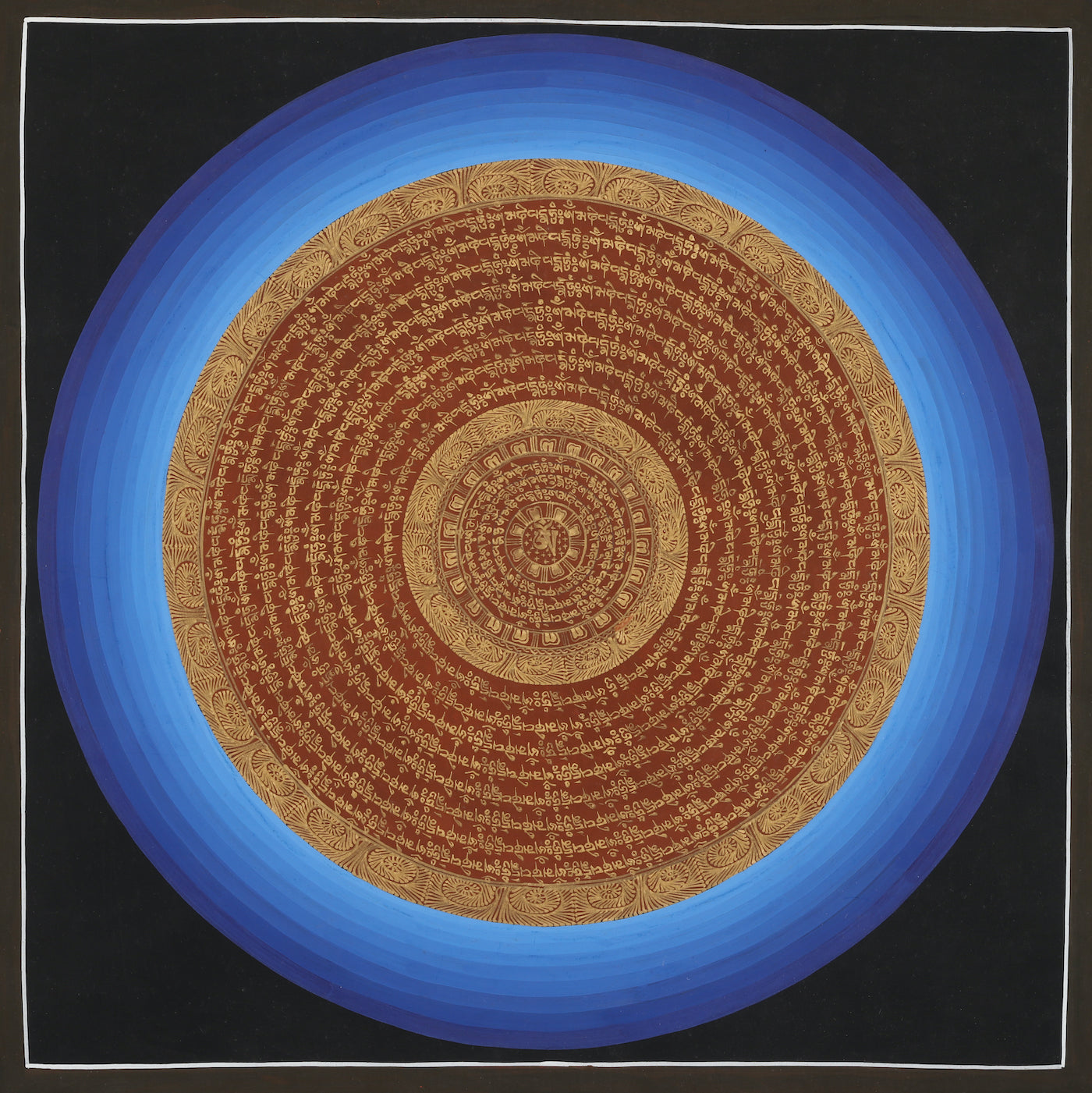
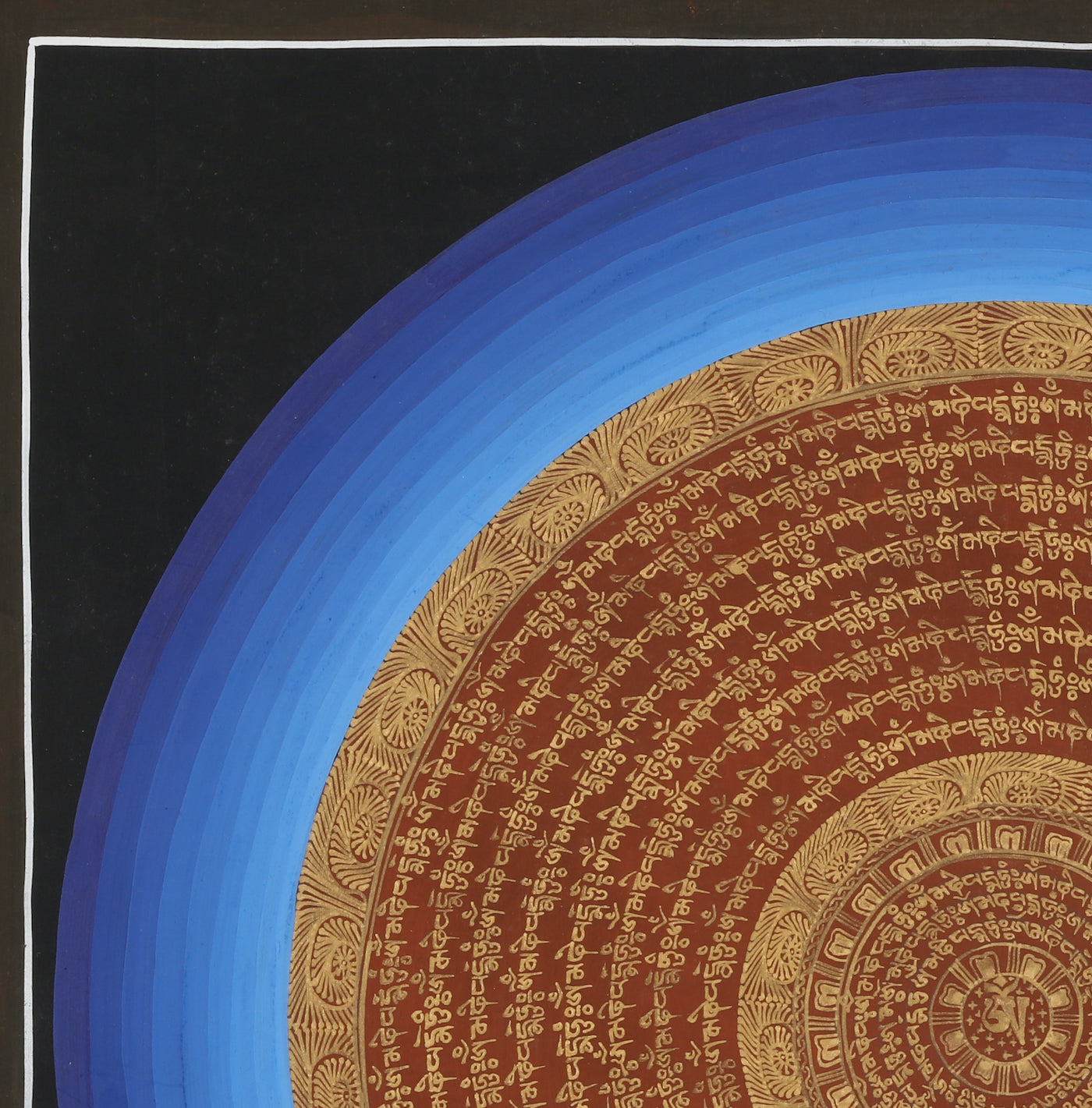
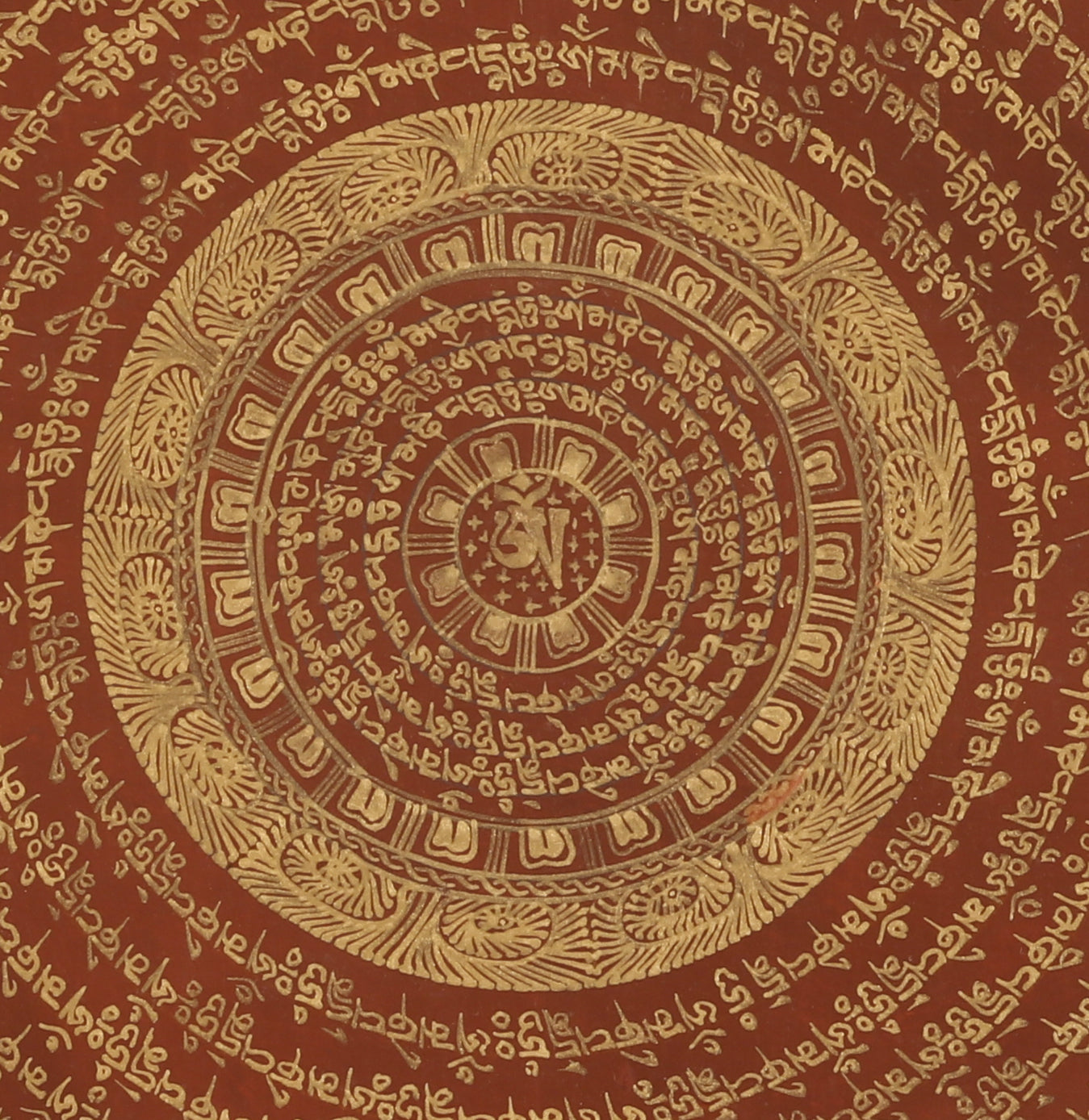
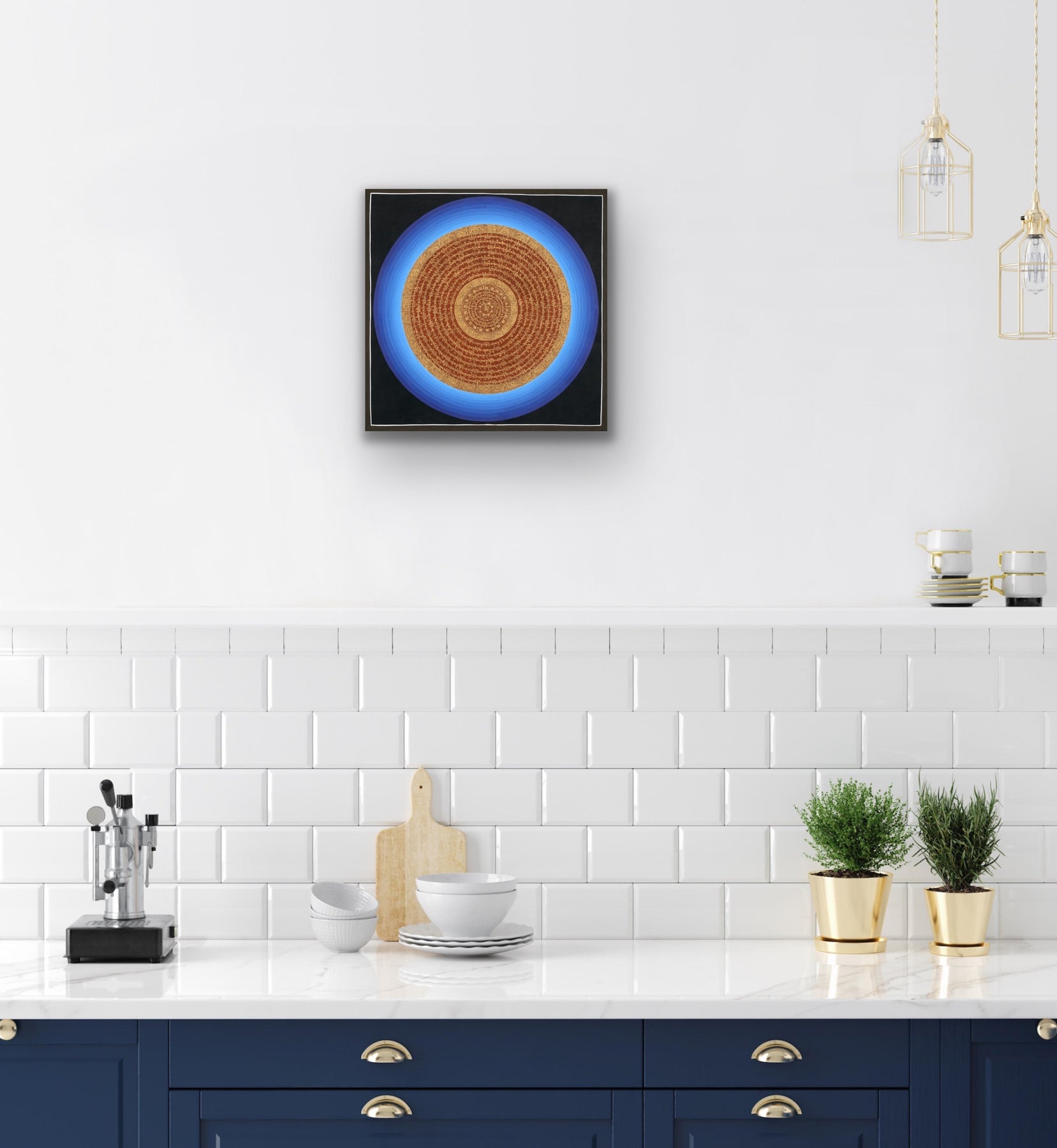
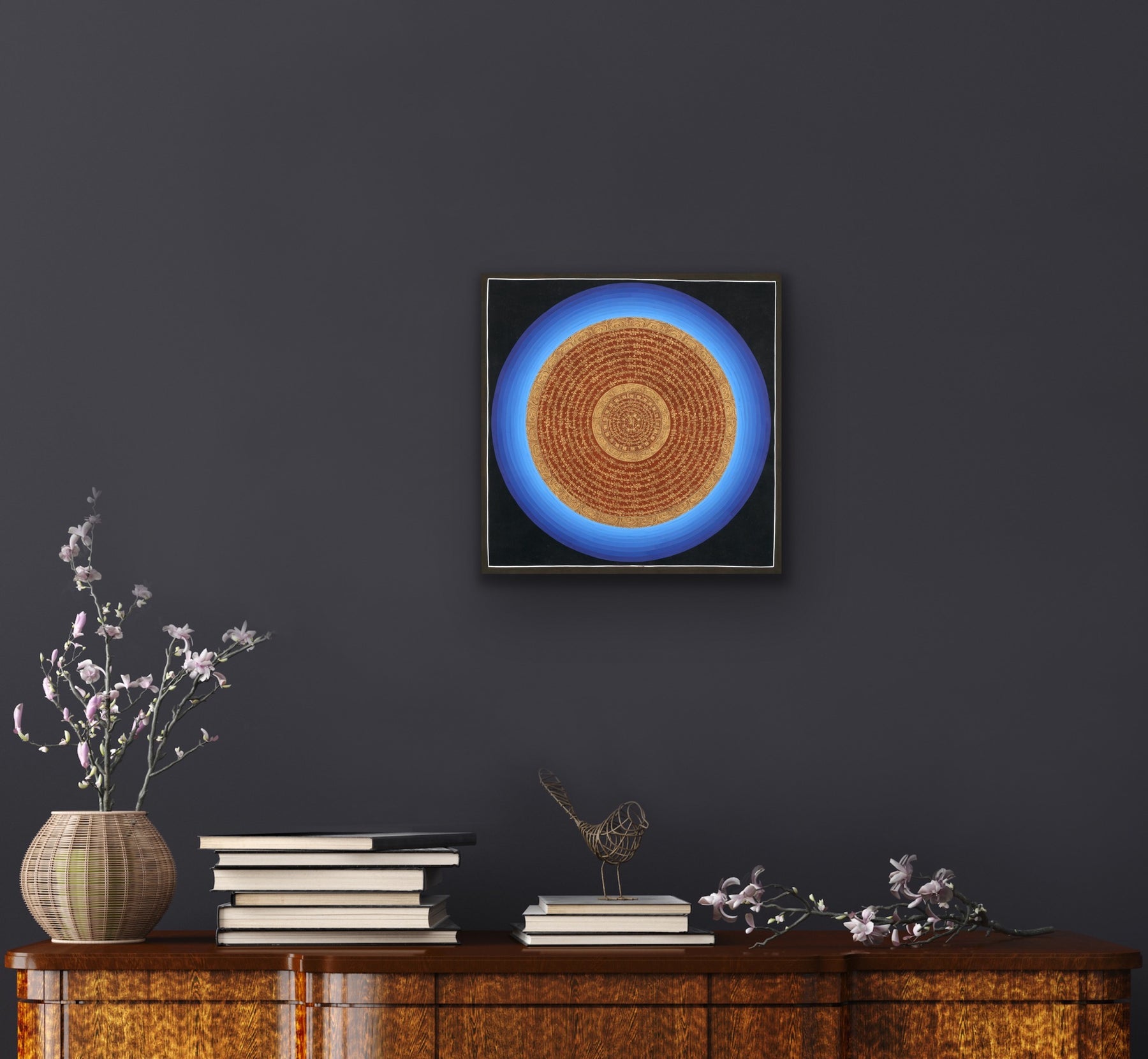
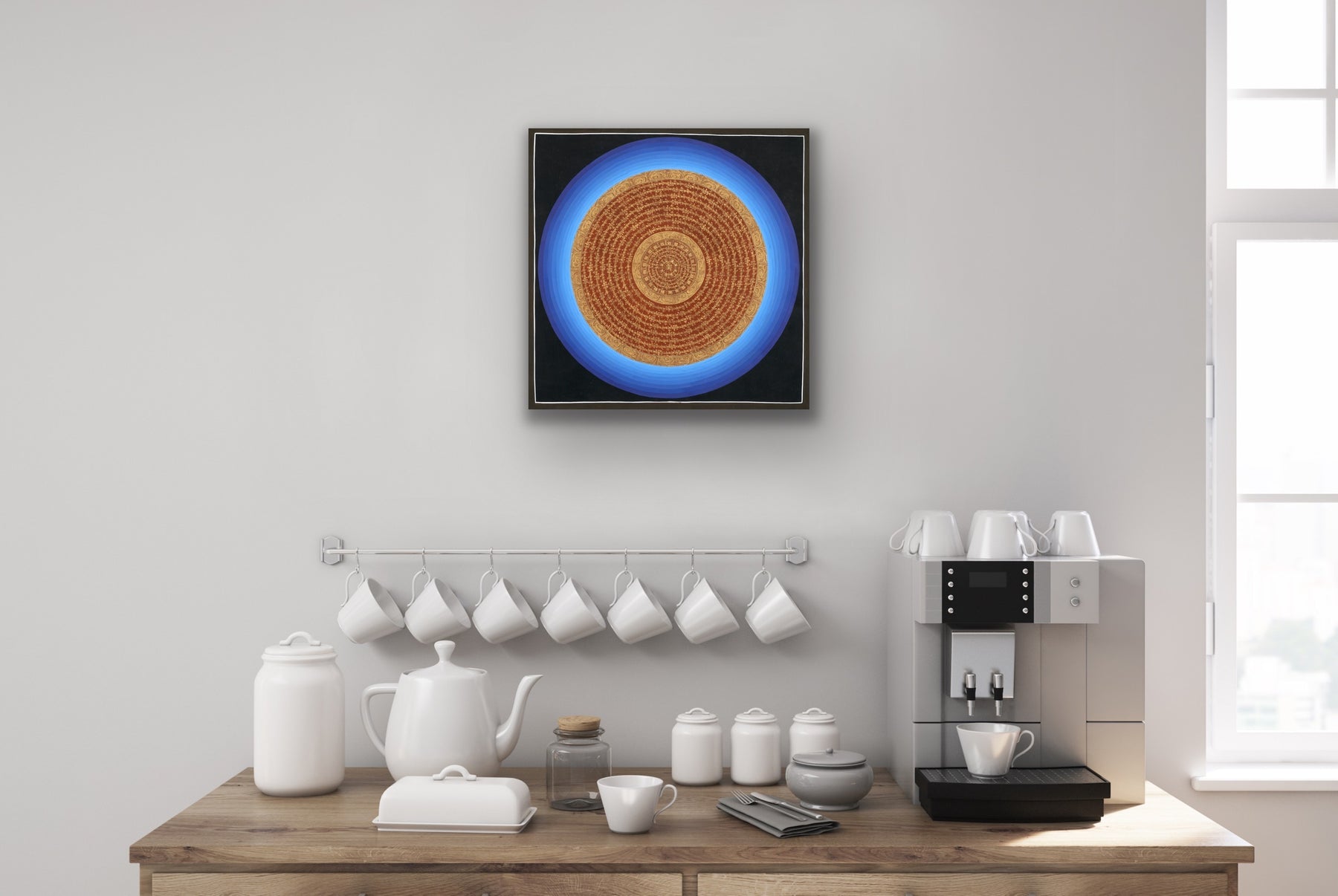
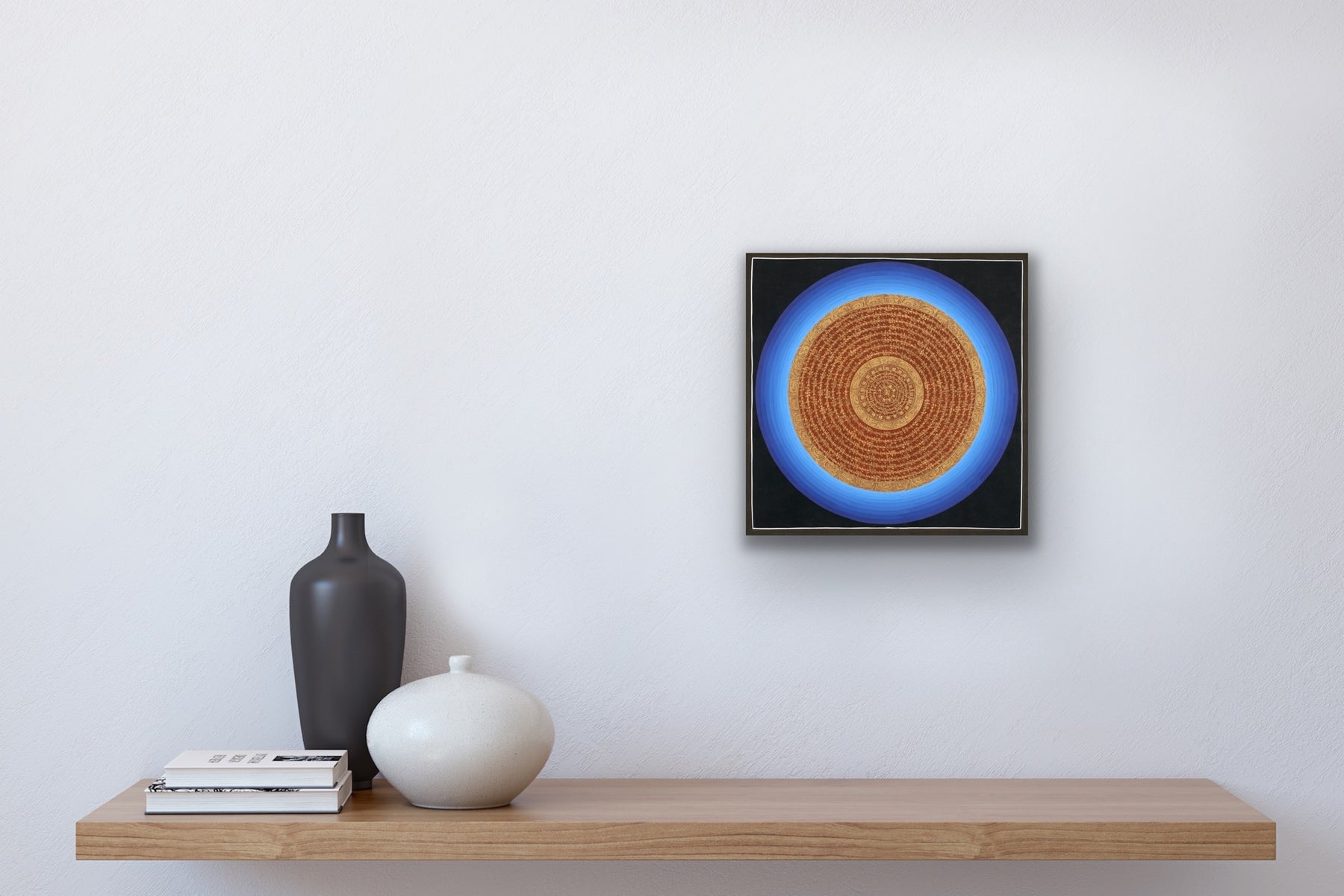
In this Mandala, the inscriptions inside are a mantra (a repeated prayer) in Tibetan script.
The prayer is pronounced: "Oṃ maṇi padme hūṃ" (Hail the Jewel in the Lotus). The mantra is seen as the condensed form of all Buddhist teachings.
In Tibetan Buddhism, this is the most ubiquitous mantra and the most popular form of religious practice, performed by laypersons and monks alike. It is also an ever-present feature of the landscape - commonly carved onto rocks known as mani stones, painted into the sides of hills, or written on prayer flags and prayer wheels.
MANTRA MANDALA WITH EIGHT AUSPICIOUS SYMBOLS
These eight symbols appear often in Tibetan religious art. They are particularly prevalent in sand (ephemeral) mandalas and are believed to be the symbolic representation of the transient universe.
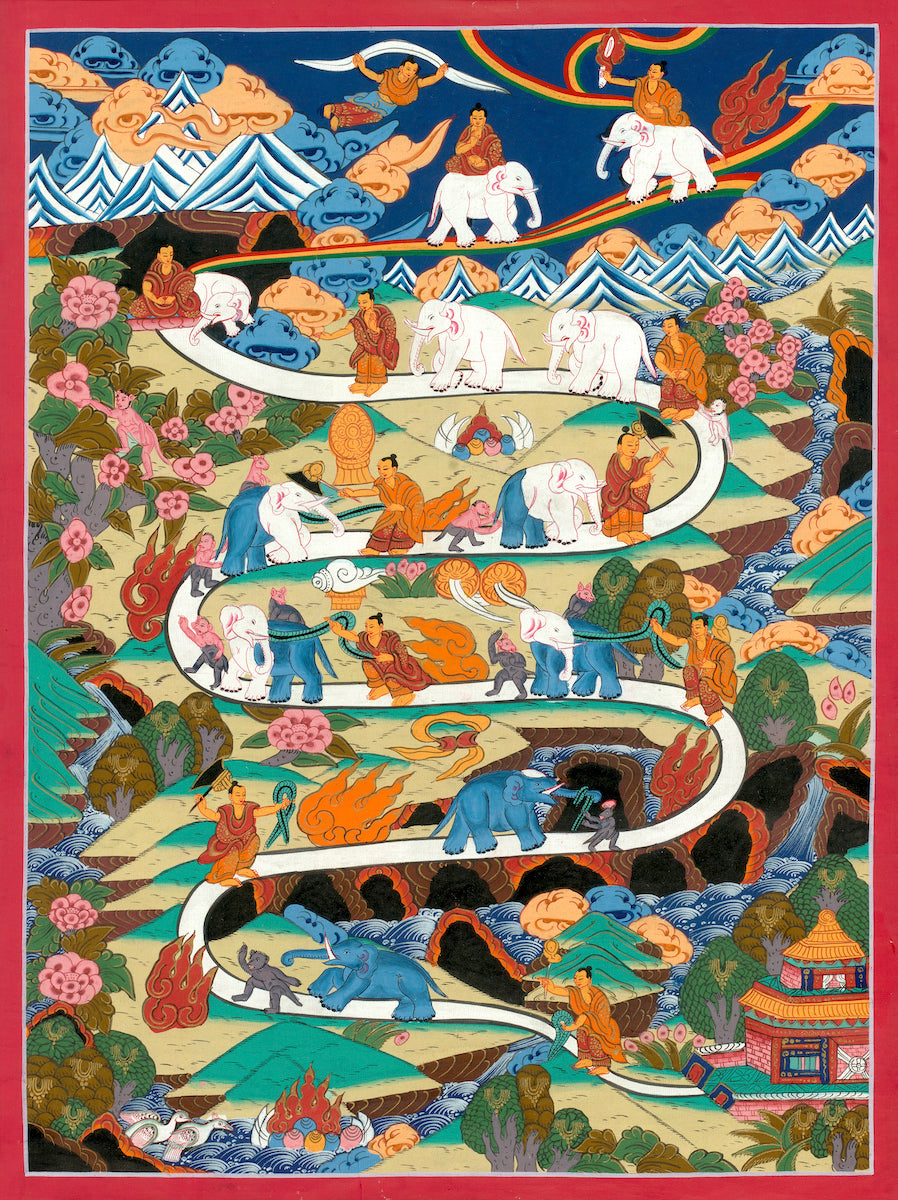
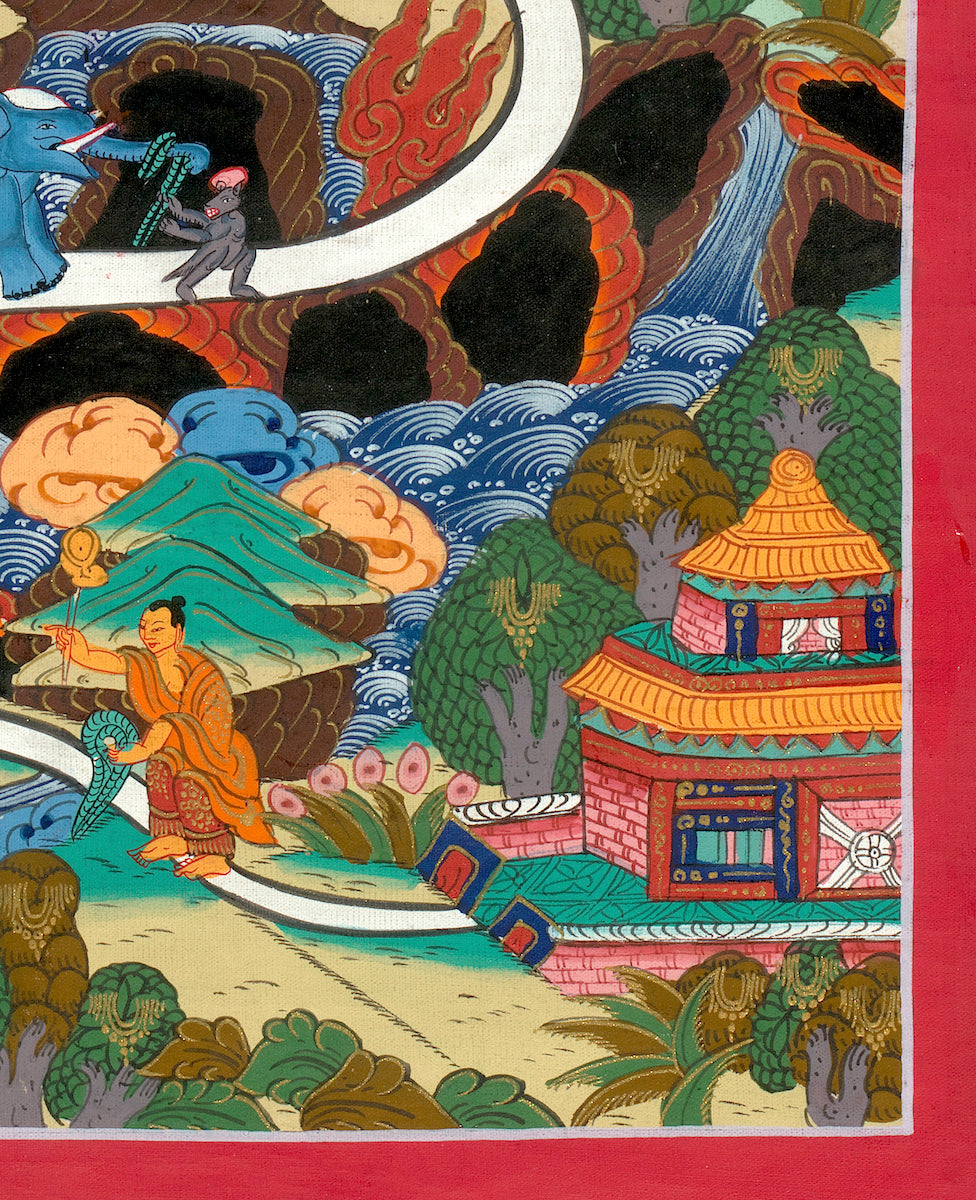
PATH TO NIRVANA
This Thangka is also known as the "Path to Enlightenment" or "Way to Heaven".
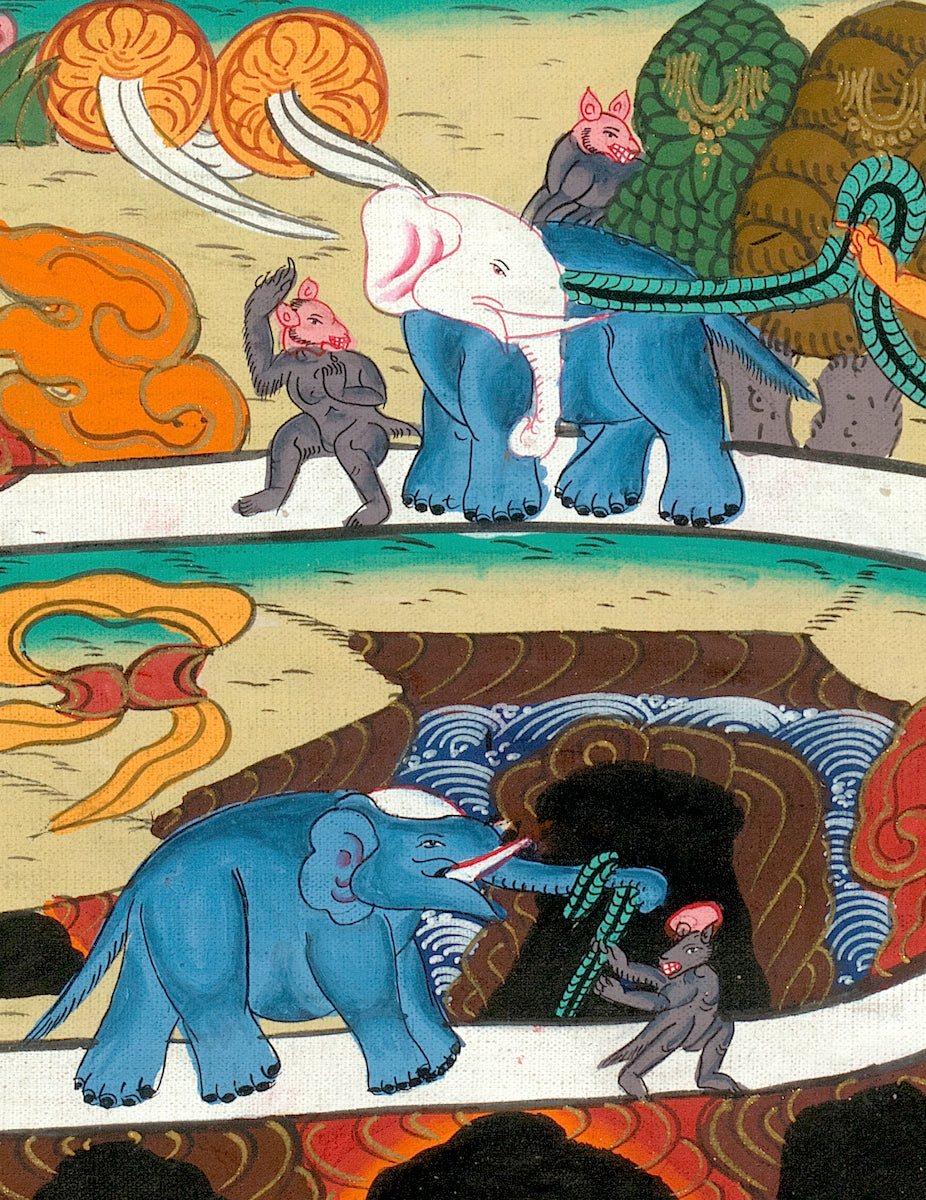
This mnemonic diagram depicts the nine progressive stages of mental development, which are obtained through the six powers: of study, contemplation, memory, comprehension, diligence, and perfection.
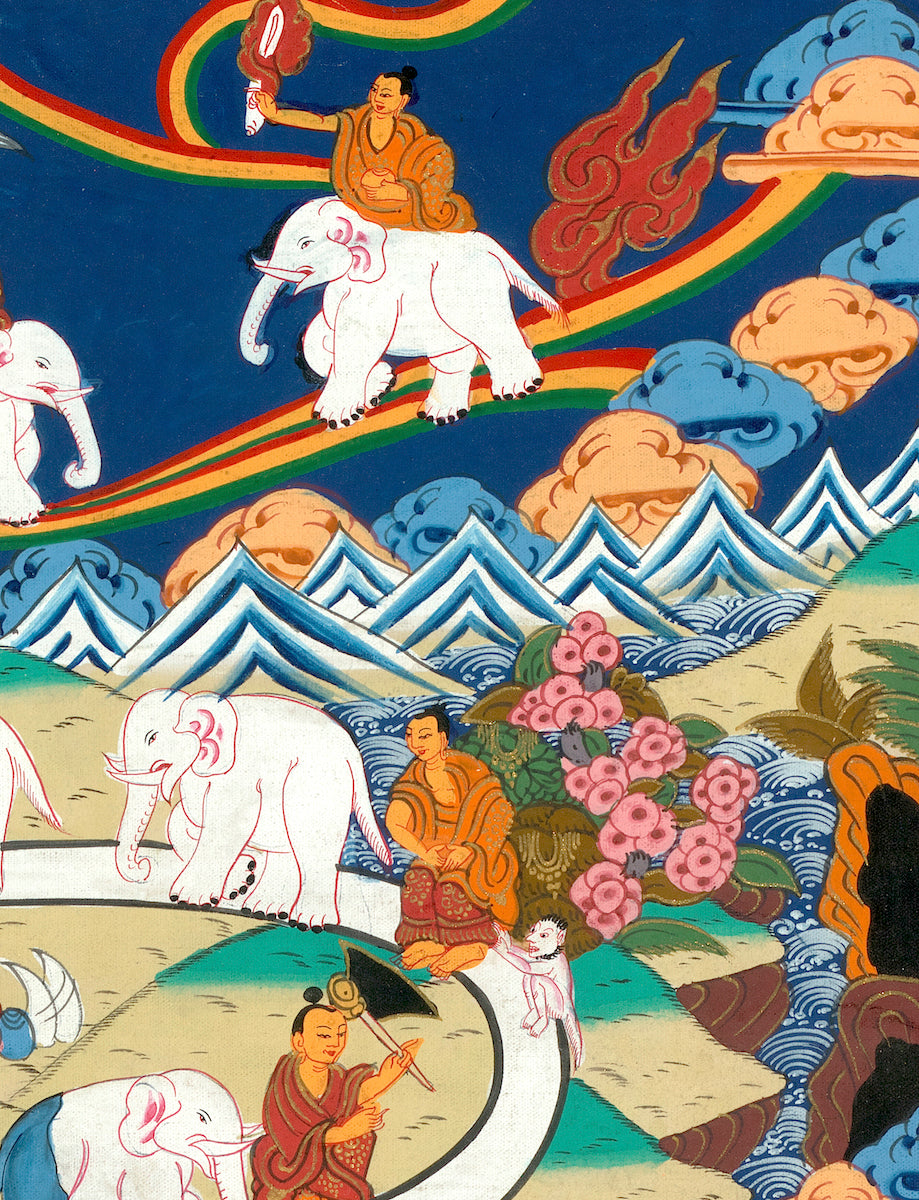
The elephant represents the mind, and its dark color represents mental dullness. The monkey represents distraction or mental agitation, and its brown color represents scattering.
The black elephant follows the path of heaven and at the end of the path, it becomes a white elephant.
At the end of the path concentration is attained, and the ‘purified elephant’ of the mind is now completely submissive.
Green Tara Thangka
See MoreThousand Buddhas
The Thousand-Buddha motif is a recurrent theme in the Buddhist art of Central Asia and China. The motif depicts a multitude of buddhas arranged in a grid fashion, all seated in meditation on a lotus pedestal, and its popularity increased predominantly during the Northern Wei dynasty (386-534) in northern China.
Thousand Buddha is portrayed meditating in the middle of the canvas, holding an alms bowl in his left hand and his right palm touching the floor in the bhumisparsha mudra. This gesture symbolizes Buddha's victory out over evil Mara, which he accomplished by praying to and summoning the soil goddess Bhudevi. The multiplication of Buddhas in the painting's background symbolizes the universal nature of enlightenment.
Ultimately, The Thousand-Buddha motif manifests a key teaching of Mahayana Buddhism, that is: all sentient beings equally have buddha-nature and can attain enlightenment.
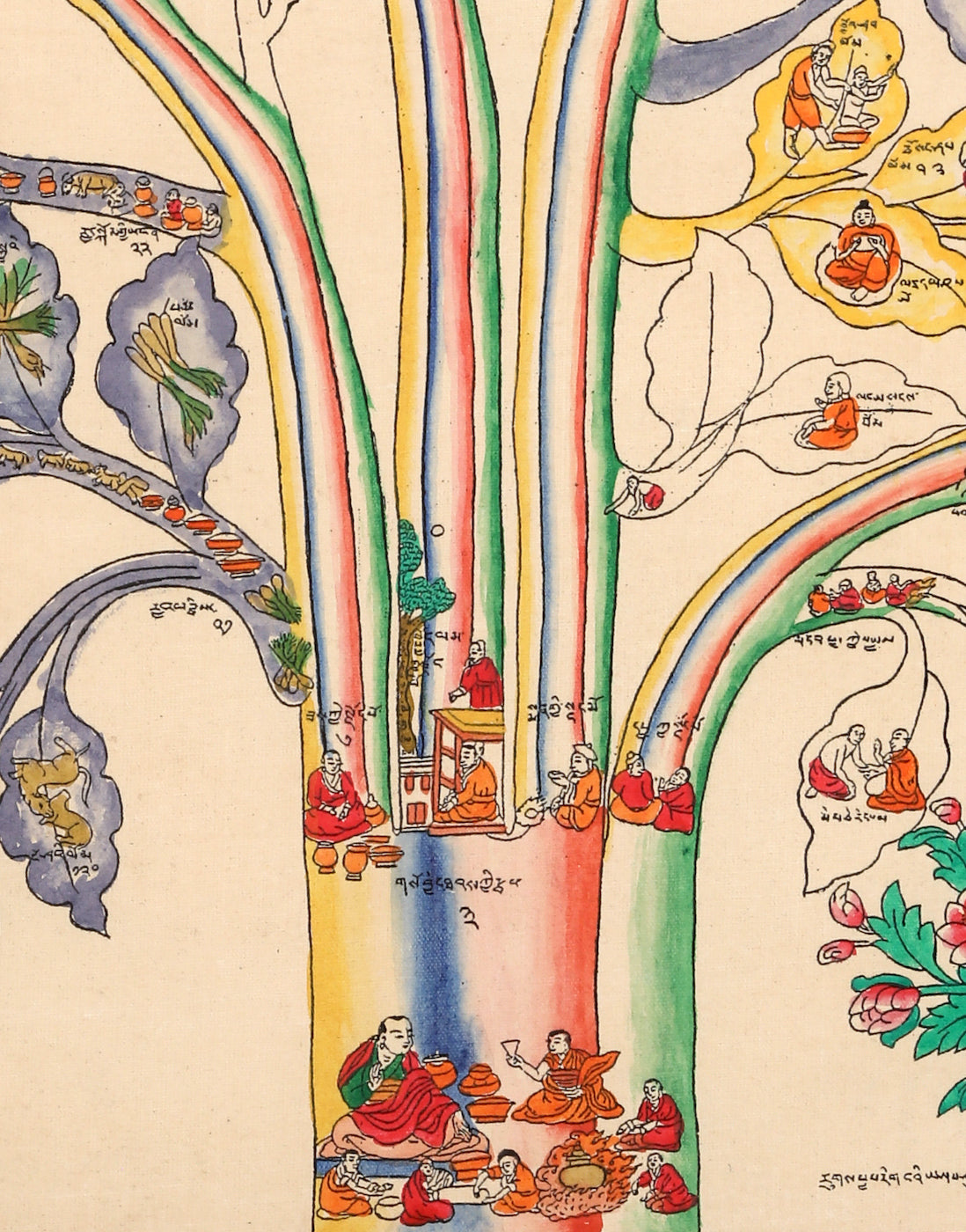
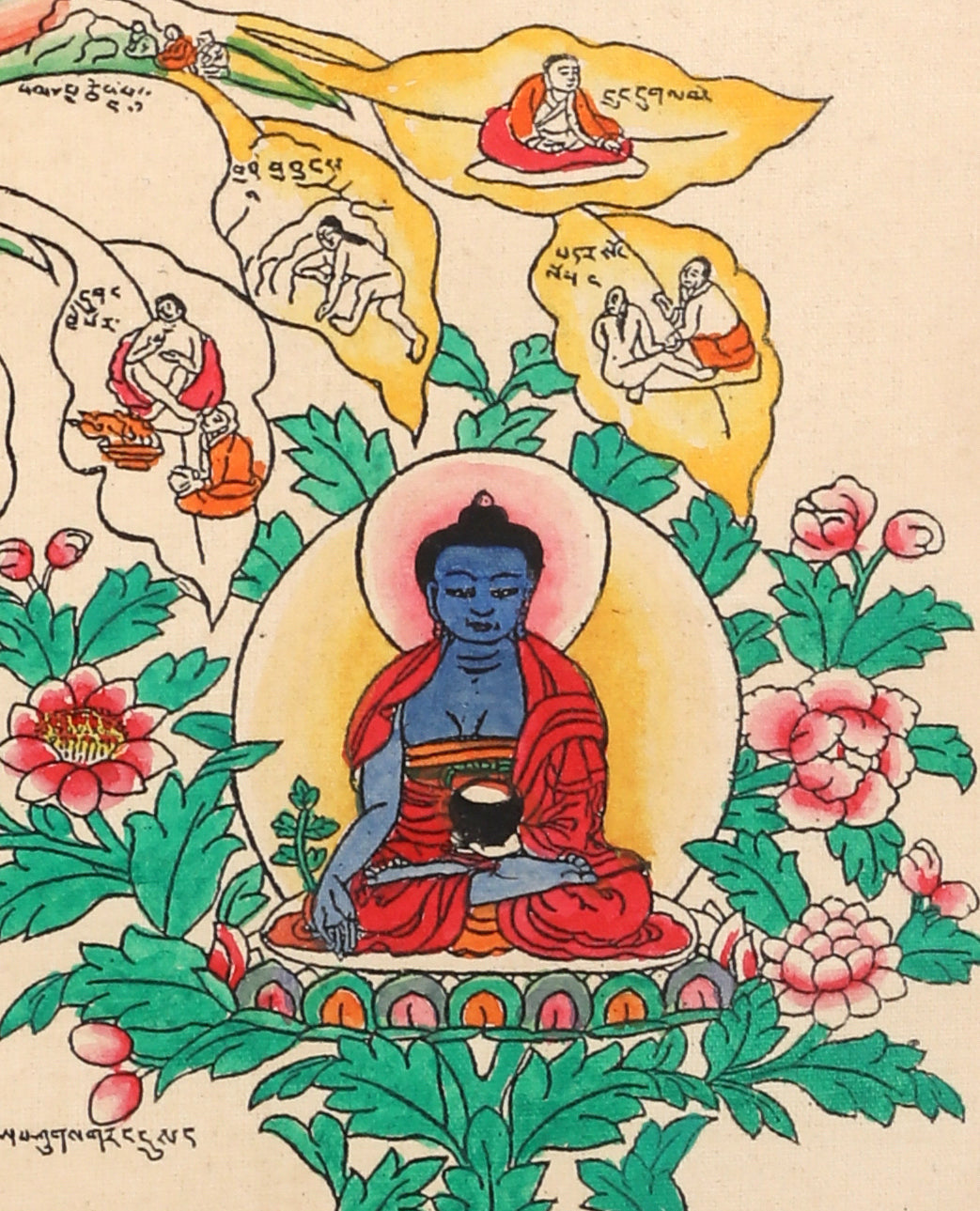
MEDICINE THANGKA
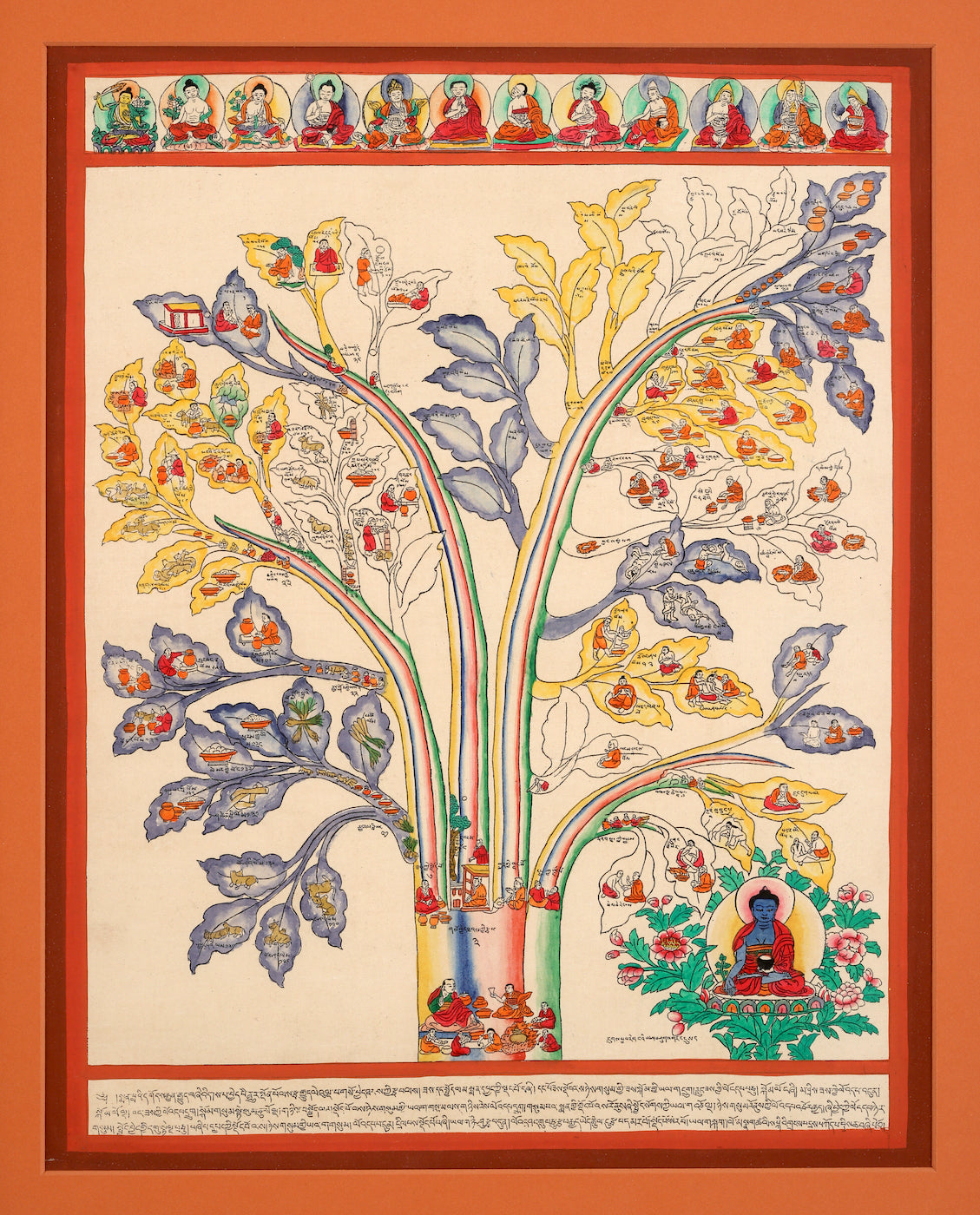
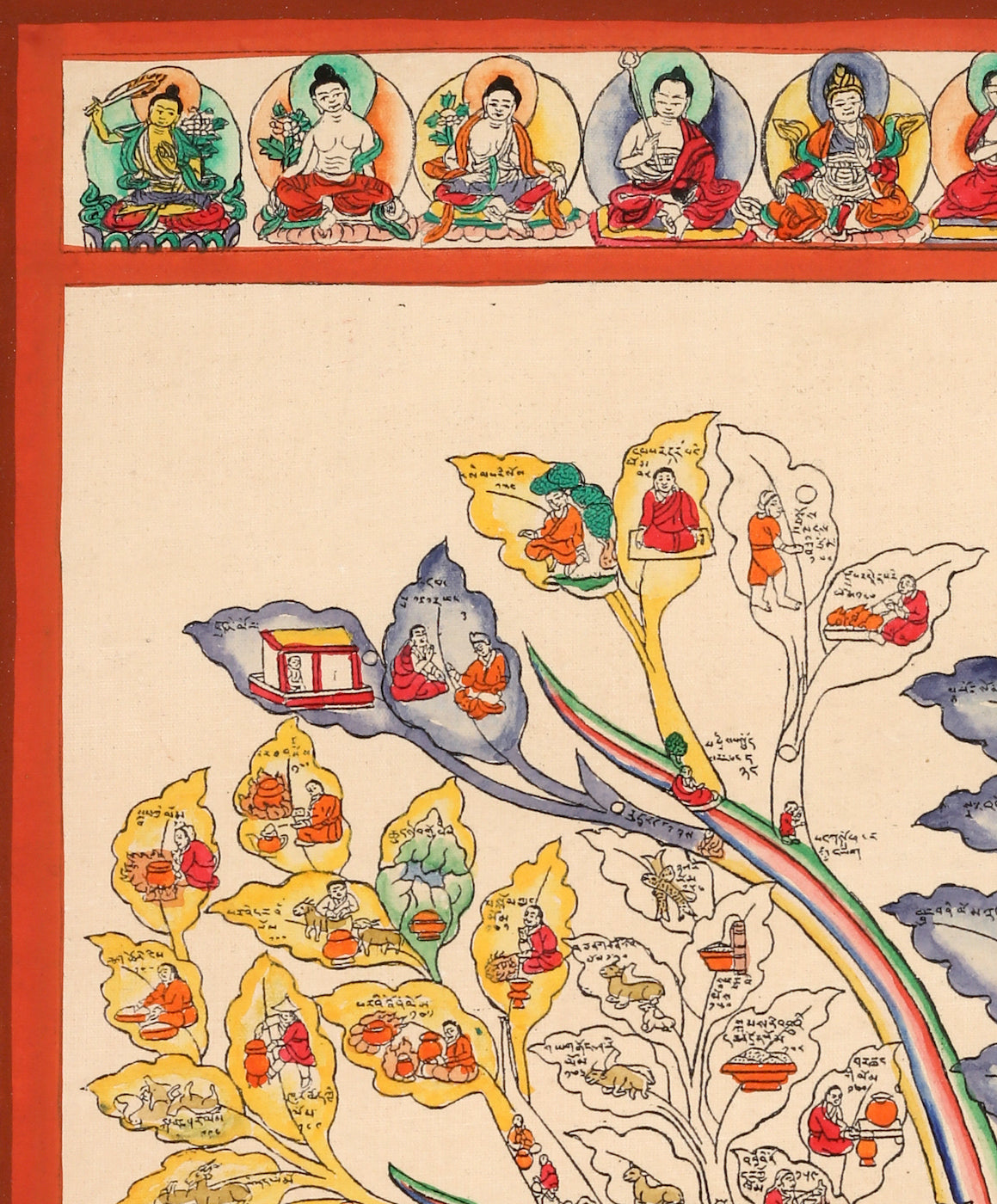
The Tibetan medical system is often described as a tree in the Root Tantra, the first of the Four Tantras, or rGyud bZhi.
The tree represents the system's nine paths to understanding well-being, which are grouped into trunks of two, three, and four. Each stem addresses a different aspect of physical, emotional, and spiritual health.
Tibetan medicine had developed a rather sophisticated knowledge of anatomy and physiology, which was acquired from their long-standing experience with human dissection. Tibetans out of necessity, had long ago adopted the practice of celestial burial (also Sky burial) because of Tibet's harsh terrain in most of the year and deficit of wood for cremation.
As result,Tibet has become a home of the Buddhist medical centers Chogppori and Menchikhang (or Menhang),between the twelfth to sixteenth century A.D., where monks came to study even from foreign countries.
Our Art Exhibit
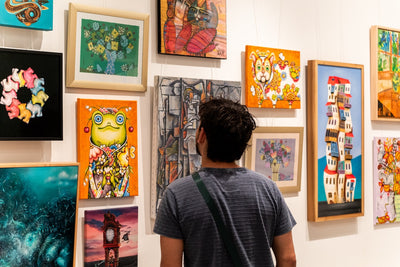
Photos from our art reception and the Castro Art Walk in January 2025.
Take a look at our currently available original paintings and prints